Description
Opinion Only. Not for Medical Reference.
MOTS-C
“Exercise in a bottle“– it’s an exercise mimetic peptide. Anti-aging. Bone health. MOTS-C is an AMPK upregulator, which boosts glucose uptake. In other words, it tells your cells “it’s daytime”. It also delays melatonin release. This means it can keep you awake, and give you energy. Only take this in the morning. Taking it late in the day can lead to insomnia.
The FDA is meeting with the Pharmacy Compounding Advisory Committee (PCAC) on 7/23/26 to evaluate MOTS-C forobesity and osteoporosis.
In experimental models, MOTS-c has demonstrated the ability to enhance exercise endurance, insulin sensitivity, and mitochondrial biogenesis. It effectively signals cells to shift toward energy efficient metabolic states, similar to what occurs during exercise or caloric restriction.
Research in the American Journal of Physiology confirms that it helps with fat loss by forcing fatty acid oxidation– i.e., it causes the body to burn fat instead of glucose.
A 2019 study (Hepatology) showed that it reverses fatty liver disease.
A 2022 study in Neuroscience Review indicates that it upregulates BDNF (Brain Derived Nuerotropic Factor), which appears to stall or even reverse alzheimers.
“MOTS-C doesn’t make you smarter, it just fixes the energy crises that is making you stupid”
JACC Journals found that it improves heart function after a heart attack in less than 12 hours, by making heart muscles’ mitochondria more efficient and reducing cell death, which means you don’t get a bunch of fibrotic tissue.
In a 2024 Cell Reports paper, MOTS-c reversed MASH (metabolic dysfunction-associated steatotic liver disease) in mice, leading to less liver fat, less cell death, less inflammation, and less fibrosis.
Another 2025 Scientific Reports study showed MOTS-c plus exercise actually improved diabetic liver fibrosis by activating the Keap1-Nrf2 antioxidant pathway and suppressing TGF-β/Smad pro-fibrotic signaling.
Better mitochondrial function, less scar tissue.
Another peptide, TB-500, can repair fibrotic tissue, while MOTS-C can help insure it doesn’t get created to begin with. These seem like a very good pairing if you use them together.
MOTS-c is your “make your liver and muscles act like an athlete” shot.

Comparing MOTS-C SS-31:
MOTS c is generally explored in models focused on fat metabolism, glucose regulation, endurance, and metabolic flexibility, due to its effects on AMPK activation and cellular energy adaptation.
SS 31, by contrast, is more commonly studied in models involving mitochondrial dysfunction, fatigue, and oxidative stress, where improving ATP efficiency and mitochondrial stability is the primary objective.
Because they target different aspects of mitochondrial biology, combination research involving both compounds is increasingly common. MOTS c acts primarily as a metabolic signaling peptide, helping cells adapt to energetic stress. SS 31, by contrast, works directly at the level of the mitochondrial membrane, improving the efficiency of ATP production machinery itself.
Dosage: 0.5-1mg 3-5x per week., or 2.5-5mg 1-2x per week. I personally lean towards 3mg every 3 days. Cycle 4 weeks on, 2 weeks off.
You should start at an even lower dose than the above at the beginning (maybe about half), because about 30% of people will get a histamine reaction for the first couple of shots. So start lower, then titrate up to regular dosage.
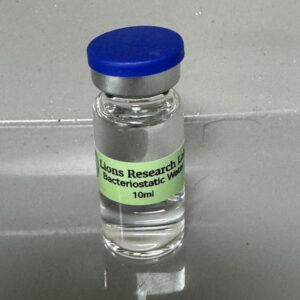
10mg vial with 1cc BAC = 1mg per 10 units, or 3mg per 30 units.
30mg vial with 1.5cc BAC = 2mg per 10 units, or 5mg per 25 units.